


Circular Saw Blade Maintenance: When Is Sharpening Necessary?
Circular saw blade maintenance is essential to ensure cutting quality, extend tool life and reduce production costs.
Recognizing the signs of wear in time makes it possible to intervene before the blade’s performance compromises productivity and the quality of the finished product.
But when is it necessary to sharpen a circular saw blade? Let’s look at the main signs to keep an eye on.
When to Sharpen a Circular Saw Blade: The Signs to Look For
During industrial operations, certain changes in how the machine works or in cut quality can indicate that the blade needs sharpening.
1. Increased Machine Load
Some systems are equipped with sensors that signal when the blade requires excessive effort during cutting.
This can be an indicator that sharpening is needed.
2. Longer Cutting Times
If the time needed to complete a cut increases compared to normal operating conditions, the blade may have lost efficiency.
An increase in processing time is therefore a sign not to be underestimated.
3. Abnormal Noise During Cutting
Increased noise during operation can indicate wear on the circular saw blade.
In particular, the sudden appearance of a high-pitched noise calls for attention, because it may point to a problem in the cutting conditions.
4. Worsening Cut Quality
Cut quality is one of the most evident indicators of the blade’s condition.
The presence of burrs, irregular finishes or crooked cuts may indicate the need for new sharpening to restore the tool’s performance.
5. Workpiece Dimensions Out of Tolerance
When cut pieces no longer meet the required dimensional tolerances, it is important to check the condition of the blade.
A loss of precision can in fact be a sign that sharpening is needed.
HSS and TCT Blade Maintenance: What to Check
In addition to the signs that can be detected during cutting, it is important to observe the condition of the blade and its teeth.
For HSS and TCT circular saw blades, certain elements can indicate the need for maintenance, repair or replacement.
- Broken teeth: damaged teeth call for an evaluation to decide whether to repair or replace the blade
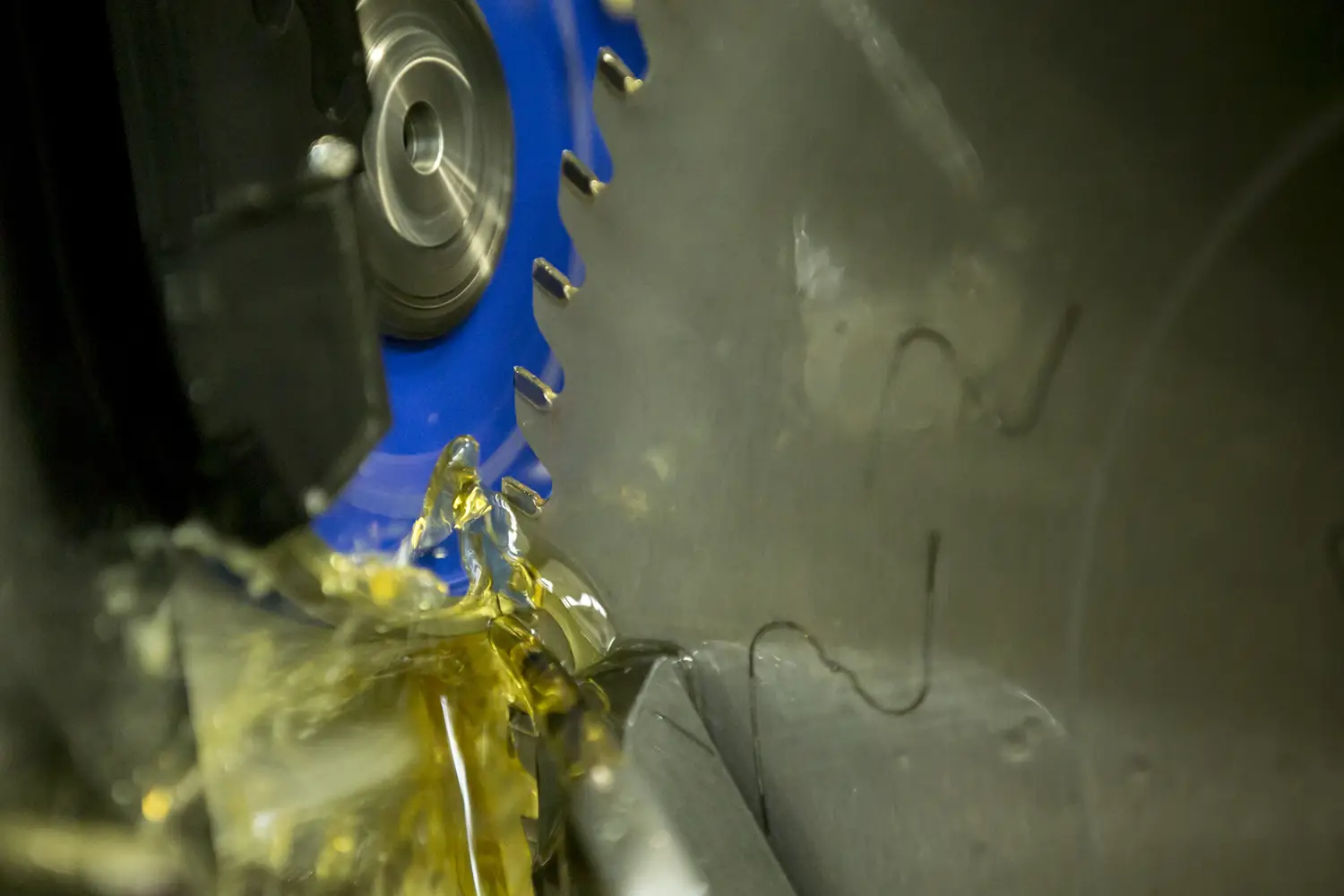
- Material stuck to the sides of the blade: residue can compromise cutting efficiency and may require removal and new sharpening
- Chips with undefined outlines: they may indicate that the blade is not cutting correctly
- Clogged tooth gullets: material buildup can compromise the cutting process and signal the need to intervene
- Excessive tooth wear: heavily worn teeth can reduce machining quality and require sharpening
Recognizing these signs helps identify the right moment to work on the tool.
Why Is Regular Circular Saw Blade Maintenance Important?
Proper maintenance helps keep blades in suitable operating condition, preserving cutting quality and production efficiency.
Intervening promptly on signs of wear makes it possible to:
- Maintain cutting quality and precision
- Extend blade tool life
- Limit problems related to tool wear
- Reduce production costs
- Preserve plant productivity
For this reason, it is important not to underestimate changes in blade performance during operations.
Moreschi Circular Saw Blade Sharpening and Maintenance
With almost 40 years of experience in the industry, Moreschi supports companies in the maintenance and sharpening of circular saw blades, helping to preserve tool efficiency and machining quality.
Recognizing the signs of wear and intervening at the right time is essential to keep the performance of the cutting process high.
Are Your Blades Showing Signs of Wear?
Rely on Moreschi’s experience to assess the condition of your tools and identify the most suitable intervention.